By Pastor Virviescas Gómez
Special Correspondent for Open Science at UNAB. Reporter with 40 years of experience and three Simón Bolívar Journalism Awards.
UNAB University, the Bucaramanga Mayor’s Office, and even Atlético Bucaramanga supporters are working together on initiatives focused on Social Football Fandom, Peace and Human Rights, Ethnic Communities, and Disability. By 2027, the ball will be in the City Council’s court.
Public governance is about much more than transparent public spending, the mayor of the day ordering potholes to be repaired, or cracking down on motorcyclists and street vendors in this increasingly chaotic city. Nor is it limited to demands for more police patrols or calls for a mass transit system that does not collapse under the blind indifference of government officials, business leaders, and citizens alike.
With this reality in mind—and as the city transforms into the “Boston of Latin America” or the “South American Barcelona”—UNAB University and the Bucaramanga Mayor’s Office have embarked on the ambitious—perhaps quixotic—task of devising and implementing public policies that will have a profound impact on its 625,000 residents and the thousands of people who come and go from the metropolitan area.
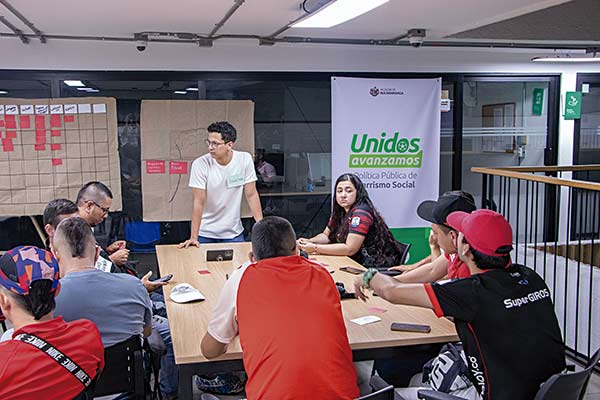
These initiatives include policies on Social Football Fandom, Peace and Human Rights, the Afro, Raizal, and Palenquera population, and Ethnic Communities. The Social Football Fandom Policy seeks to institutionalize supporter engagement as a participatory and inclusive process, recognizing organized supporter groups and their chapters as legitimate social actors. It promotes their social, cultural, and educational development while overcoming the stigma and barriers that hinder their full participation in community life.
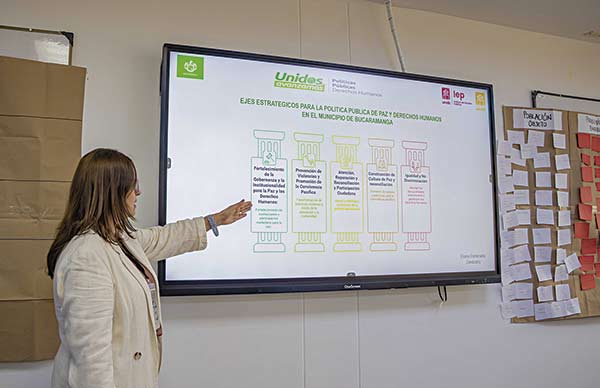
The second policy seeks to ensure that everyone can fully exercise their human rights while strengthening territorial peace. To achieve this, it addresses the structural causes of violence, promotes the peaceful resolution of urban conflicts, and reinforces institutional governance through intersectional and differentiated approaches. Ultimately, its objective is to foster a culture of peace, social justice, dignified reparation, and community reconciliation.
A complementary Disability Policy, led by Universidad Manuela Beltrán with technical support from UNAB University, aims to ensure the full participation of people with disabilities and their families by creating more accessible environments and promoting coordinated action across sectors. It calls for the gradual removal of physical, communication, attitudinal, and institutional barriers, alongside the implementation of universal design and reasonable accommodations. Guided by the principles of equity and intersectionality, the policy aims to ensure meaningful inclusion on equal terms.
María Eugenia Bonilla Ovallos, an economist with a Ph.D. in Rule of Law and Global Governance and Director of UNAB University’s Institute of Political Studies (IEP), leads the University’s multidisciplinary technical assistance for the development of these public policies. She explains that Bucaramanga began strengthening its territorial public policy processes several years ago. As part of that effort, a comprehensive review of existing policies revealed shortcomings in the way they had been formulated.
Among the main challenges identified was the lack of clear, standardized methodologies for developing public policies, which has often affected both their implementation and their effectiveness. In response, the Manual for Policy Formulation and Implementation was published in 2024, designed to provide practical, innovative guidance for developing, updating, and implementing public policies in a consistent manner.
The manual serves as a tool for ensuring quality and effectiveness in public management while aligning policy development with current best practices and standards. As the document states:
“Policy formulation, in this context, is not merely a technical exercise but also an opportunity to promote citizen participation, transparency, and accountability. Effective implementation requires a coordinated and adaptive approach, while ongoing monitoring and evaluation are essential to ensure that objectives are achieved and adjusted to society’s evolving needs.”
Accordingly, the 34-page manual stresses the importance of ensuring that municipal officials clearly understand and take ownership of the key concepts underlying public policy, thereby strengthening territorial planning.
How and With Whom
Simply put, public policy establishes a long-term vision that extends beyond individual government administrations and seeks to address issues of broad social importance. It is developed through intersectoral collaboration and co-creation, bringing together government institutions, citizens, businesses, civil society organizations, professional associations, academia, and many other stakeholders.
Public policies are designed to outlast a single administration—typically remaining in force for ten years. They address socially significant challenges, are developed through collective engagement with key stakeholders, and result in actions carried out by different municipal departments according to their respective responsibilities.
These approaches begin with the recognition that public administration exists to serve people, who possess inalienable and non-waivable rights. Human rights therefore stand at the center of efforts to build a just and inclusive society that respects the dignity of every individual, regardless of whether they live in Cabecera del Llano or Ciudad Norte, acknowledging that inequality lies at the root of many development challenges.
Consistent with United Nations principles, the policy also seeks to address discriminatory practices and arbitrary distributions of power that hinder progress and often leave certain groups behind.
The territorial approach recognizes the interdependence between Bucaramanga and its metropolitan area, promoting comprehensive and sustainable development that extends beyond municipal boundaries. It seeks to coordinate policies in infrastructure, mobility, public services, and environmental management while ensuring that residents of the municipality’s 25 rural communities are no longer overlooked.
The differentiated approach recognizes the specific characteristics and needs of diverse population groups, including persons with disabilities, Indigenous peoples, Afro-descendant communities, people of different ages and life stages, gender, sexual orientation, and gender identity, older adults, foreigners and migrants, and others, ensuring that they are fully included and actively involved in public policymaking.
Environmental sustainability is also a key priority. The objective is to balance development with environmental protection by promoting responsible practices, conserving natural resources, and advancing climate change mitigation measures to safeguard quality of life for future generations. It also encourages ecological connectivity, the restoration of environmentally vulnerable areas, and better management of air, noise, and water pollution.
Those leading this initiative understand that developing effective public policy requires rigorous research. Existing studies and data must be complemented by the invaluable contributions of the people directly affected—and those who represent them—to ensure that these and future public policies are both legitimate and responsive to real needs.
By 2027 at the latest, once all the stages identified by the experts—including the legally required prior consultations—have been completed, the ball will be in the City Council’s court. The city’s 19 council members will then have to decide whether to adopt these proposals and demonstrate that they are up to the challenge. Failing to reach agreement could put at risk the considerable effort invested by the Mayor’s Office, local communities, and nearly 30 researchers from UNAB University’s Schools of Legal and Political Sciences, Economics and Business, and the Institute of Political Studies. It will then fall to future mayors to turn those agreements into reality.
 By Franz Dieter Hensel Riveros
 Por Erika Alcira González Pinto