By Xiomara Karina Montañez Monsalve
Editor. Social Communicator and Journalist, with a Master’s Degree in Political Science and a Specialization in Education for New Technologies.
Experts consulted by Ciencia Abierta point out that when the signs of chronic stress, isolation, and cognitive difficulties experienced by caregivers go unnoticed, they themselves can end up becoming a second patient.
As Colombia’s population ages rapidly and neurodegenerative diseases such as Alzheimer’s become more common, providing comprehensive care for older adults is emerging as one of the country’s most pressing healthcare challenges.
The challenge extends beyond medication, specialized care in clinics and hospitals, and training enough professionals to meet growing demand. Public health researchers are increasingly focusing on caregiver burnout, seeking to raise awareness of caregivers’ vital role, recognize their efforts, and ensure they can provide care without sacrificing their own health.
According to Hendrik Adrian Baracaldo Campo, professor and researcher in UNAB’s Nursing program and School of Health Sciences, primary caregivers—as they are known in the medical field—are typically close family members, most often women, including daughters, wives, and daughters-in-law. They assume the ongoing responsibility of caring for an older adult with functional dependence, chronic illness, or cognitive impairment.
“The syndrome develops when the demands of caregiving exceed the caregiver’s physical, emotional, financial, and social resources,” says Baracaldo, who holds a master’s degree in Social Gerontology and specializes in epidemiology. He adds that the choice of who becomes the caregiver is rarely the result of a healthy family consensus. Instead, “the decision is usually imposed,” with the role falling to whoever is “most readily available” or “least busy”—even if that person has health problems of their own—and never with any expectation that the work should be paid.
Figures released by Colombia’s National Administrative Department of Statistics (DANE) in 2023 show that of the country’s 6.8 million full-time caregivers, 5.8 million are women (85.7%) and 972,000 are men (14.3%). In addition, 54.3% of female caregivers and 31.4% of male caregivers receive no pay or have no source of income.
According to Olga Lucía Gómez Díaz, director of UNAB’s Nursing program, these figures reveal a pronounced gender gap that reflects “a longstanding social and historical expectation that the responsibility for caring for others falls on wives, daughters, or sisters.” As an expert in health services administration with a master’s degree in Education, she explains that many women feel caregiving is an unavoidable duty that must take precedence over their own lives.
The regional picture mirrors the national one. A study carried out by Bucaramanga’s Health Secretariat and Health Institute in partnership with UNAB between 2022 and 2023 surveyed 1,133 older adults in the city and found that caregiving has a distinctly female face: 65.5% of caregivers were women from the lowest socioeconomic strata (strata 1 and 2, on Colombia’s 1–6 scale), while 77% reported never having received any training in how to provide care.
“We frequently encounter older adults caring for other older adults who, already made vulnerable by age, are carrying responsibilities beyond their physical capacity. In this study, we met a young man with cognitive developmental disabilities who could barely speak or move, yet there was no one else at home to help care for his family member. He told us he didn’t know how to handle the patient and that on one occasion, while lifting him, he accidentally injured him because the patient’s skin was so fragile,” recalls Professor Baracaldo, who is also a member of the Colombian Association of Gerontology and Geriatrics.
When the Strain Goes Unnoticed
Gómez Díaz warns that older adults who become caregivers may face an even higher risk of mortality than the person they are caring for, largely because of increased use of sleep medications and the development of stress-related cardiovascular disease.
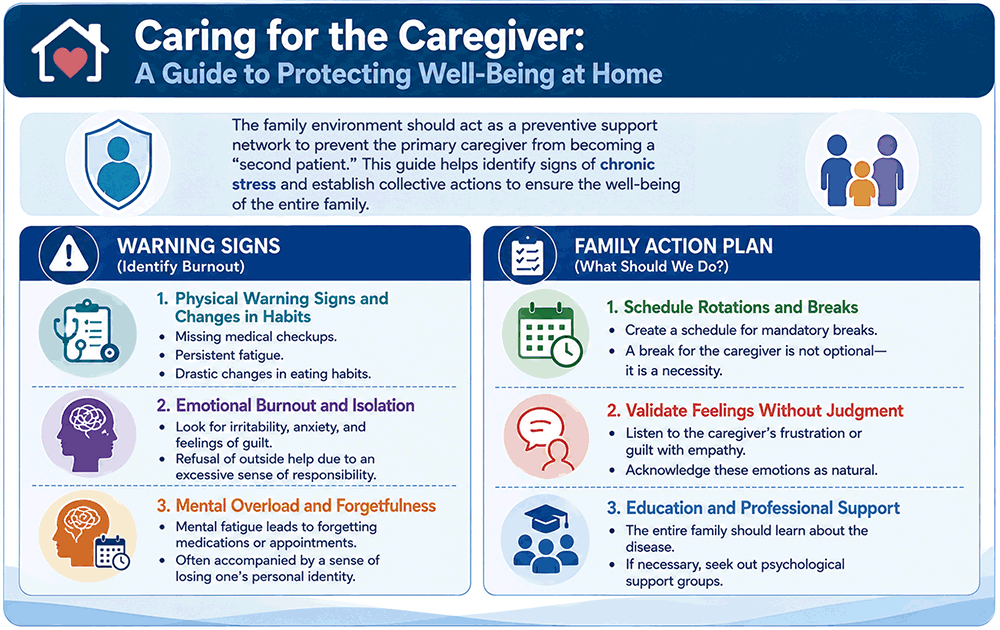
Baracaldo says persistent fatigue, irritability, anxiety, sadness, feelings of guilt, social isolation, sleep disturbances, physical pain, and difficulty managing daily responsibilities are all warning signs that families should learn to recognize.
Gómez adds that caregivers often lose interest in the world around them and begin to withdraw socially. Many also experience chronic fatigue, muscle pain, headaches, and persistent feelings of guilt. Families often dismiss their irritability or bad mood without realizing that these behaviors are cries for help from a nervous system under prolonged stress. “Sometimes, when someone offers to help, the caregiver replies, ‘No, it’s my responsibility.’ That often leads others to conclude, ‘They don’t want any help.’ Gradually, the caregiver starts rejecting assistance, convinced that no one else can do the job as well as they can—and that only speeds up their physical and emotional exhaustion,” Gómez concludes.
“We Must Care for Those Who Cared for Us”
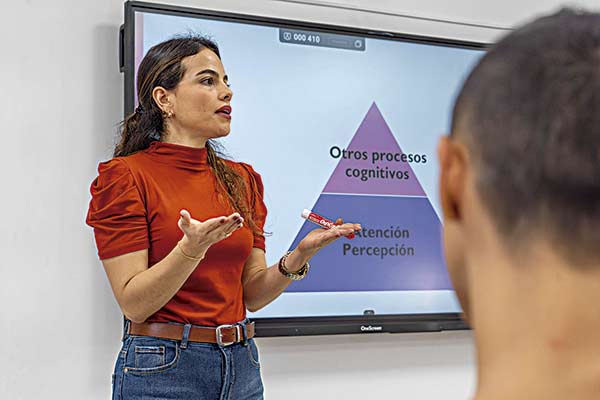
Katherine Prado Guzmán, professor and researcher in UNAB’s Psychology program and an expert in neuropsychology, explains—from a preventive perspective—the importance of recognizing the signs of caregiver burnout and the urgency of humanizing care.
Why is the role of the primary caregiver so prone to burnout?
Primary caregivers take on the responsibility of supporting someone who has lost their independence and needs help with everyday activities. Because this role often goes unrecognized—with no set schedule, vacation time, or days off—it can affect every area of a person’s life.
What are the physical and emotional signs that indicate someone is suffering from this syndrome?
We’re talking about physical, cognitive, emotional, and behavioral effects. Sleep patterns and self-care habits change, weight fluctuates, and caregivers often become more sedentary and stressed. From my neuropsychological perspective, we begin to see cognitive difficulties. It’s not that they’re experiencing neurodegenerative decline, but if we compare a caregiver’s cognitive profile with the results of neuropsychological assessments and with the caregiver’s own account, we see mental fatigue, frequent forgetfulness, difficulty making decisions, and an inability to organize medical appointments, manage medication, or carry out household tasks.
What arguments does the family use when it comes to delegating care to one of its members?
The reasons are usually related to work and other commitments. In other words, the most common refrain is “I don’t have time,” and that’s very hard to hear, even though the discussion is about protecting someone important to the family. The argument “since you don’t work, you should do it” is very common—in other words, this isn’t recognized as formal, paid work, although our research has found that a minimal percentage-based payment is sometimes provided. It’s justified with statements like “I don’t know them as well as you do,” “you’re their favorite,” or “I don’t have the skills to care for them.” The truth is that, even though many people don’t like caring for the sick, we must be there for those who were there for us (grandparents, parents, or aunts and uncles). It’s an act that acknowledges what they did for us, and it’s an act of love.
What risks are involved when an older adult cares for others?
They are already going through their own aging process; their physical abilities won’t be the same, nor will the way they process information. Their ability to handle many tasks changes, and what will happen when this other person can no longer care for their spouse, and a caregiver is needed—not just for one person, but for two? That’s the reality.
How can we preserve the patient’s dignity without undermining the caregiver’s quality of life?
We must view the patient as a person with rights and values, not as a burden. It’s a common mistake to exclude them, because they are valuable. From the very moment of diagnosis, both family members and the healthcare system contribute to a process of exclusion. We must remember that we are caring for a person and make the most of every opportunity to help them feel as comfortable as possible.
 By Franz Dieter Hensel Riveros
 Por Erika Alcira González Pinto